BBC Scotland’s environment correspondent
 BBC
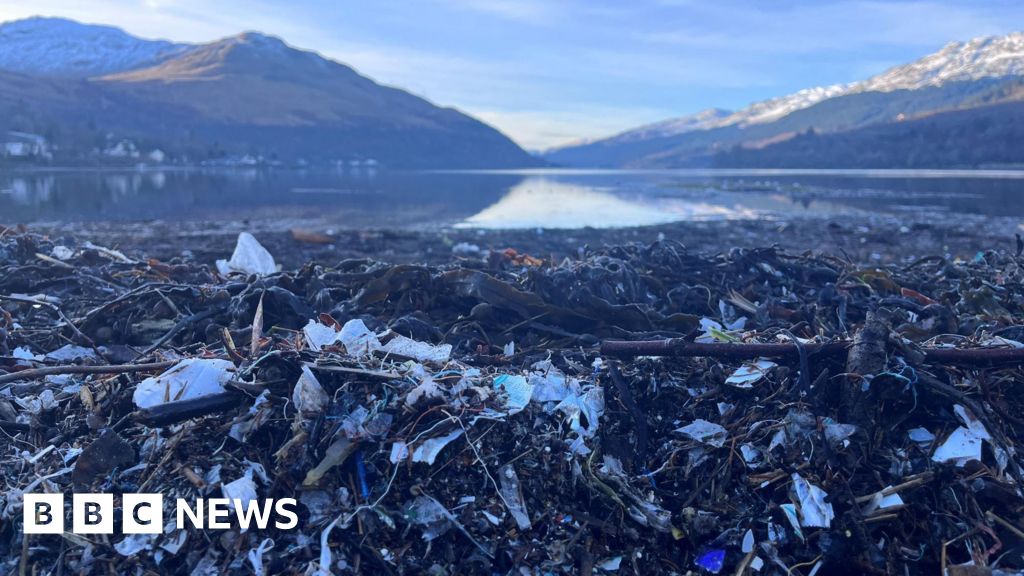
BBCAt the head of beautiful Loch Long in Argyll sits one of Scotland’s biggest plastic problems.
A combination of prevailing winds and the rotation of the earth drive litter up the loch to create what is known as the Arrochar litter sink.
About 62,000 items wash up on the beach each year, much of it from the waterways in and around Glasgow, Scotland’s largest city.
It is estimated that 11% of the rubbish which enters the River Clyde – which flows through the city – and its tributaries is eventually washed up at Arrochar.
The local residents can’t clean it up fast enough.
Lots of the waste is tangled in the seaweed which was once an asset to the community.
It used to be collected by the bucketload to fertilise farm land, but that’s no longer possible because of the pollution.
Campaigners say the only solution is to stop the waste entering the water in the first place – and that the introduction of a deposit return scheme for bottles and cans would play a major role in doing just that.


A Scottish scheme was originally meant to be operational by 2023 but was delayed after objections from businesses to the inclusion of glass.
It then emerged that the UK government was considering blocking Scotland’s plans because it wanted a single scheme for all four nations.
UK ministers eventually decided they would grant an exemption – but only if glass was taken out of the Scottish plans to align it with the scheme it was planning to introduce in England.
That position led to angry recriminations and eventually an announcement from Circular Economy Minister Lorna Slater of a further delay until at least October 2025.
That was later extended to 2027, in line with the UK scheme.
But in December, the Welsh government confirmed it was opting out of the UK-wide proposition and creating its own scheme – which would include glass recycling.
In the meantime, a deposit return scheme has been successfully launched in the Republic of Ireland which has captured almost a billion items in its first year.
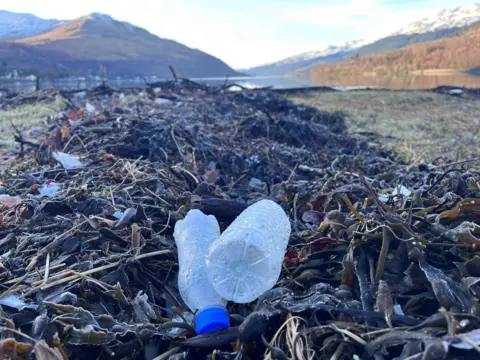
All of these political rows have been frustrating to people who just want to see the marine environment free of litter.
Kirsty Crawford from the Marine Conservation Society (MCS) says it’s vital for places like Arrochar that the current target date of 2027 is not pushed back again.
She said: “With each fresh high tide you’re going to get more litter washing in.
“It is a big task at hand but this is where we hope the deposit return scheme would help see a reduction in that problem.”
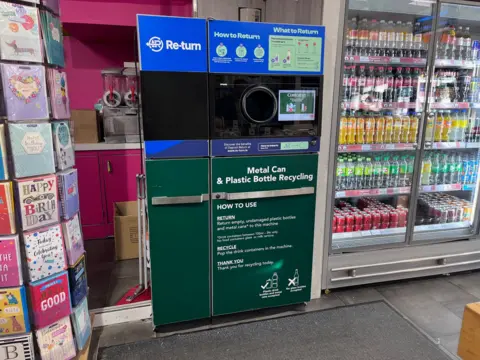
The scheme in Ireland went live a year ago and more than 900 million items have so far been returned to shops.
Consumers have to pay a deposit of 15 cents for every standard-sized plastic bottle or can which is purchased. The deposit is refunded when the item is returned.
Glass is not included in the scheme.
Some retailers were initially resistant, but others say it has led to an increase in footfall in shops.
Reverse vending machines can cost shop owners about €15,000 (£12,500), but stores do have the option of collecting returned items over the counter.

Environmental group Coastwatch Europe, which monitors more than 500 stretches of shore in Ireland, says the scheme is already having a significant impact.
Seven years ago volunteers were recording around 60 bottles per kilometre of beach – but a survey in September and October found an average of eight per kilometre.
Co-founder Karin Dubsky believes that’s not just down to the deposit return scheme but also a broader appreciation of the impact of plastic pollution.
”There is so much positivity and I think it has opened the gates to a different kind of thinking,” she said.
Politicians hope a deposit return scheme scheme will boost Scotland’s stubborn household recycling figures, which have barely budged for a decade.
In 2023, 43.5% of household waste was recycled, compared with 42.9% in 2014.
The Scottish government says it expects the scheme to reduce littering by a third and increase recycling of single-use drinks containers to 90%.
Lorna Slater, the Scottish Greens minister who introduced the scheme during her time in government, says she hopes glass can still ultimately be included in the scheme.
But she says it’s most important that there are no further delays to its rollout.
That view is echoed by environmental charities like the MCS and Keep Scotland Beautiful.
On Monday, the deadline passed for applications to run the scheme for Scotland, England and Northern Ireland.
Scottish ministers say they are committed to delivering the scheme by 2027.